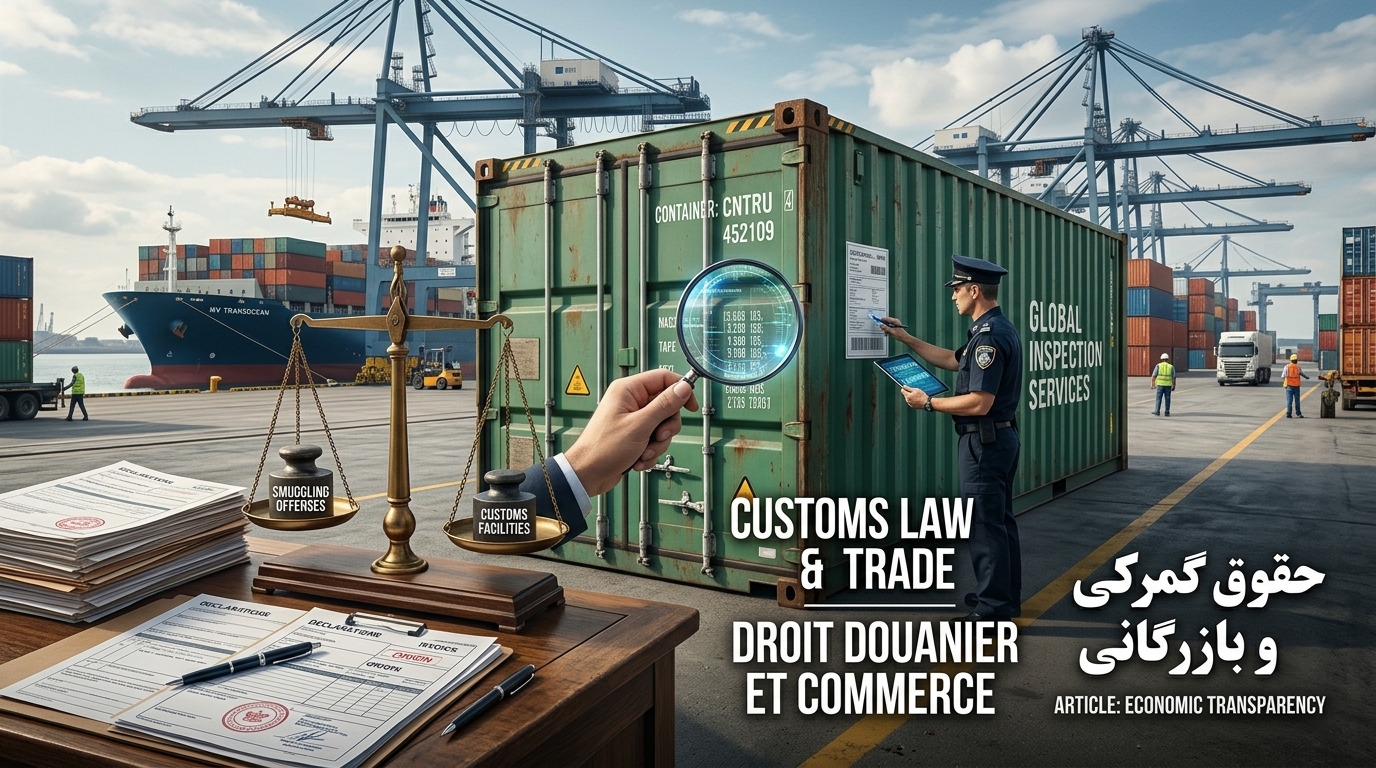
The concept of "smuggling" in the Iranian legal system, traditionally and based on the common understanding of economic actors and the general public, has referred to the "entry or exit of goods in violation of legal formalities" (subject to Paragraph A, Article 1 of the Law on Combating Smuggling of Goods and Currency).
However, the legislature's amendments in 2021 (the Persian year 1400), particularly in Paragraph (C) of Article 2 and its appended note, significantly expanded this concept. Based on these amendments, actions such as "declaring goods to customs... by presenting void, expired, duplicated, or forged permits" were also deemed smuggling.
[Translator's Note: Under Iranian law, the legal definition of "smuggling" is not limited to secretly crossing borders; it also encompasses "statutory smuggling," which includes administrative and customs fraud.]
Although the legislator's goal in this expansion was likely to increase transparency and combat fraud, the "interpretation" of this provision has become challenging in practice. Recently, the Islamic Republic of Iran Customs Administration (IRICA) adopted a "broad interpretation" of the concept of "permit" in this article, extending its scope to "export approvals" (arising from the export of products like apples and kiwis). These approvals merely served as the basis for granting "tariff concessions" (reductions in customs duties and taxes) for banana imports.
As a result of this interpretation, around 70 active commercial companies—some of which benefited from these "concessions" beyond their approved quota due to relying on official systems and the occurrence of "systemic errors" in the calculation and amortization of quotas—are now recognized as perpetrators of the crime of smuggling. Consequently, they have been referred to the State Discretionary Punishments Organization.
[Translator's Note: The State Discretionary Punishments Organization, or Ta'zirat, is a specialized quasi-judicial tribunal in Iran under the Ministry of Justice that rapidly handles economic and trade infractions].
A conviction there would impose exceedingly heavy penalties on these economic actors.
In the midst of this, following an inquiry by these companies to the Legal and Judicial Support Commission of the Iran Chamber of Commerce
[Translator's Note: The primary official body representing the private sector in Iran],
I prepared an analytical report regarding the true nature of these "approvals." In this report (which is attached), an effort was made to provide a correct legal inference of the nature of this process—demonstrating it was "concessionary" rather than a "substantive permit"—by comprehensively reviewing all directives issued by Customs and the Ministry of Jihad-e-Agriculture
[Translator's Note: The Iranian ministry overseeing agriculture, which also regulates agricultural trade quotas].
Fortunately, on the sidelines of a meeting at the Judiciary, this analytical report was brought to the attention of Dr. Rahimi, the Honorable Minister of Justice. Additionally, today, another copy of this report was submitted to the Honorable Deputy of the Anti-Smuggling Headquarters at the Presidency.
It is hoped that by accurately elucidating the legal dimensions of this issue, we will witness the removal of obstacles and problems facing the private sector in the country's economy. The path to the country's progress lies not in creating hurdles, but in removing barriers for private sector economic actors and avoiding the expansion of a "criminalizing perspective" toward commercial domains; otherwise, a serious disruption will occur in the country's economic security and supply chain.
Written by Reza Bastani Namaghi
Back to Home
 Read More
 Read More
 Read More
Legal Challenges of the Expanded Concept of "Smuggling" for Economic Actors in Iran
Other Articles & Notes
Does Unified Precedent No. 869 Harm the Insurance Industry? A Critical Look at Two Analytical Errors in Iranian Law!
Recently, Unified Judicial Precedent No. 869 was issued by the General Board of the Supreme Court of Iran. This ruling r...
The Antidote That Arrived After Sohrab’s Death!*
In 2022, along with a group of friends, we filed a petition with the Court of Administrative Justice, arguing that the "...
Banking Policy Transparency in Iran: A Legal Victory for Accessing Central Bank Internal Bylaws
I have always believed that to work effectively, we must first understand the rules of the game and the fundamental prin...