I have always believed that to work effectively, we must first understand the rules of the game and the fundamental principles of our field.
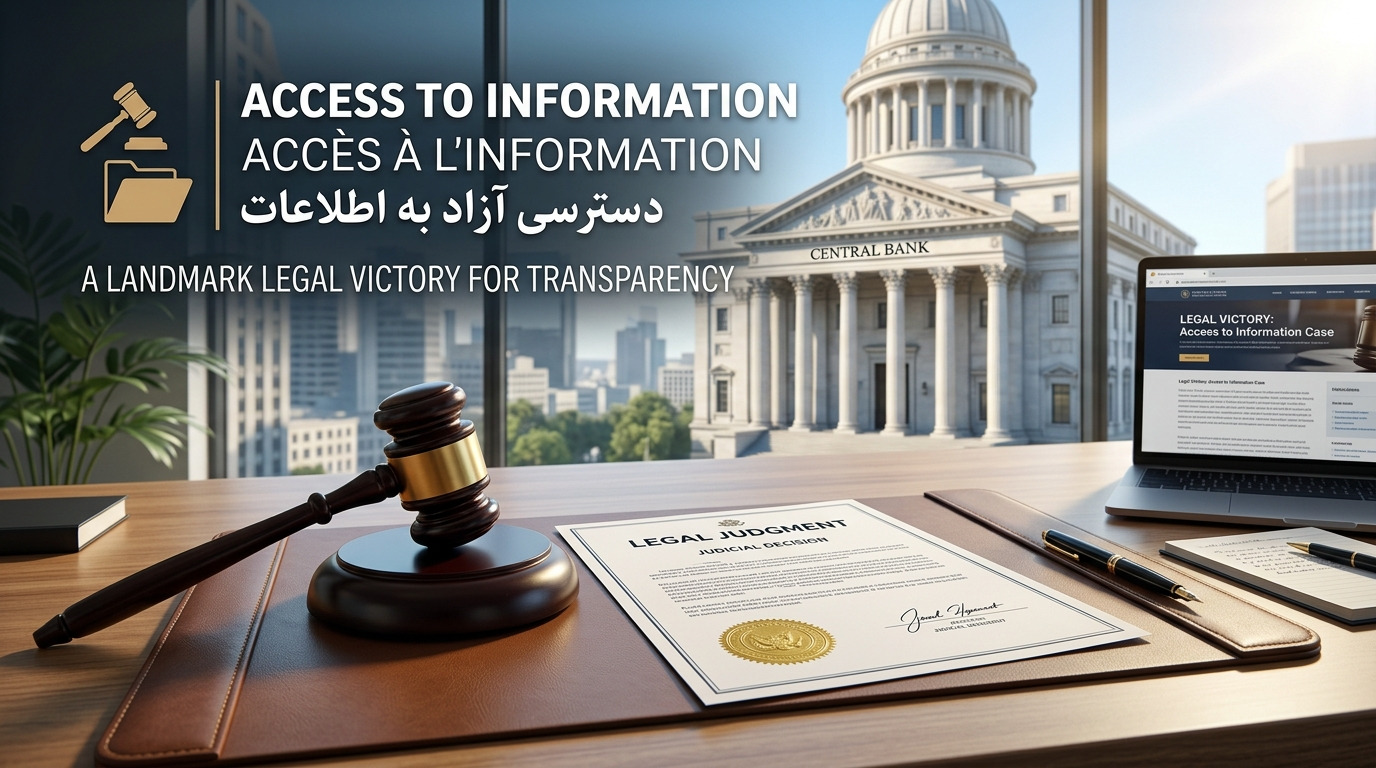
Some time ago, to better understand the decision-making frameworks within Iran's banking policy-making institution, I sought to study the full text of the internal bylaws of the Central Bank's Supreme Council. However, I discovered that this document had never been published.
When I filed a request for the publication of these bylaws through the Freedom of Information system, the Central Bank refused to disclose them without providing a logical reason or legal justification. This became a major concern for me: why should a document that is merely an internal bylaw—and which should not be considered a state secret—remain inaccessible to those active in this field?
Since I did not receive a convincing response, I decided to pursue the matter through the Court of Administrative Justice. My goal was simply to obtain a clear answer to a simple and logical request.
Today, I received the ruling from Branch 35 of the Court of Administrative Justice. The honorable judge correctly referred to Article 11 of the Central Bank Law, which states: "The principle regarding the negotiations and resolutions of the Supreme Council... is non-confidentiality and public disclosure." Since no official request had been registered to classify these bylaws as confidential, the Court ruled in my favor and ordered the Central Bank to publish the document.
I shared this experience here to demonstrate that sometimes, our simple and legal pursuits for transparency can help uncover hidden rules and regulations, allowing all of us to operate in a more transparent environment.
Back to Home
 Read More
 Read More
 Read More
Banking Policy Transparency in Iran: A Legal Victory for Accessing Central Bank Internal Bylaws
Other Articles & Notes
The Antidote That Arrived After Sohrab’s Death!*
In 2022, along with a group of friends, we filed a petition with the Court of Administrative Justice, arguing that the "...
Where is the Ceiling for Liquidated Damages Clauses?
In the Iranian legal system, due to certain difficulties in establishing extra-contractual civil liability—especially re...
War Victims and Reparations
The case of the US military's use of Agent Orange in the Vietnam War is one of the darkest chapters in the history of th...