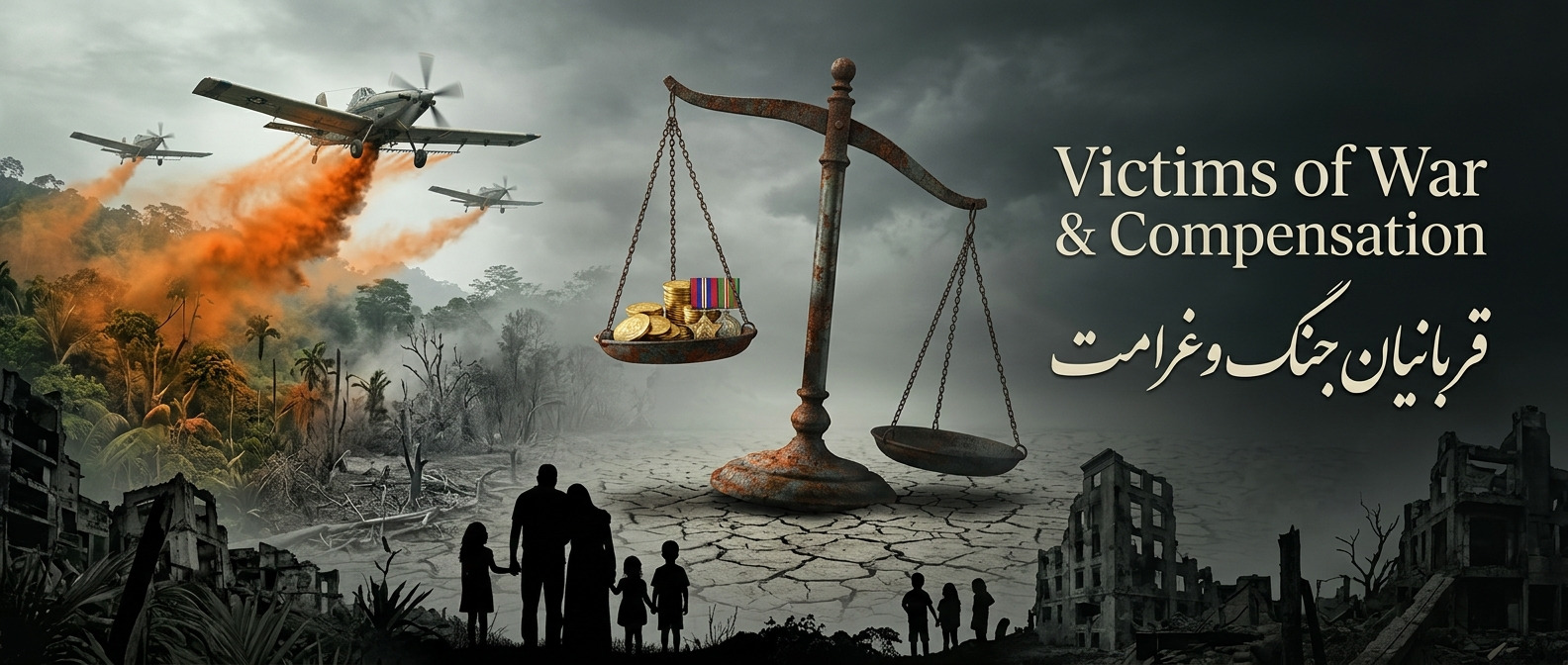
The case of the US military's use of Agent Orange in the Vietnam War is one of the darkest chapters in the history of the law of armed conflict. Over a decade, the United States sprayed approximately 76 million liters of this highly toxic herbicide over the forests and farmlands of Vietnam.
The result? Millions of victims, widespread cancer outbreaks, and generations of children born with catastrophic birth defects.
But what was the legal and international response? The US government never agreed to pay reparations to the Vietnamese people. Their legal justification was that their intent was not to poison human beings; they argued it was not a chemical weapon, but merely a tactical tool to destroy vegetation and enemy hideouts. With this superficial reasoning, a massive crime was covered up.
The bitter irony of the story is that, ultimately, the only ones who succeeded in receiving compensation were the American veterans themselves, not the innocent people of Vietnam.
Today, as the shadow of military tensions between Iran, the US, and Israel looms heavier than ever, reviewing this historical experience is a necessity. We must accept that in the aftermath of war crimes, the Vietnam scenario will be repeated, and no miraculous international court will be formed to heal the wounds of the Iranian people. Hostile powers will once again hide behind malleable legal concepts such as military necessity, proportionality, and collateral damage to justify the destruction of infrastructure and civilian suffering.
Ultimately, if compensation is ever to be paid, it will again be the soldiers and citizens of the more powerful side who—if perhaps injured during the commission of a war crime—will receive reparations in their own courts. Meanwhile, the suffering, displacement, and multi-generational consequences of war will remain solely on the shoulders of the Iranian people.
In the real world, international laws are only effective as long as they do not conflict with the interests of great powers. In times of crisis, we will have no defender but ourselves.